Quick answer: Door-knocking still works in real estate when it is run as a relationship system, not a cold pitch: a chosen farm, a genuine value reason to be there, a short respectful interaction, and disciplined follow-up. The agents who win at it are building familiarity over months, not asking for a listing at the door.
- Does door-knocking still work?
- Why do most agents fail at it?
- Why does door-knocking need a farm?
- What is a legitimate reason to knock?
- What does a good door interaction look like?
- How do you do it respectfully and safely?
- Why is follow-up the part that converts?
- What routine makes it sustainable?
- How do you measure door-knocking?
- What kills door-knocking results?
- Frequently asked questions
Does door-knocking still work?
Door-knocking is in-person outreach to homes in a chosen area, and it still produces listings because face-to-face contact builds trust faster than any digital touch — in a channel almost no one works consistently anymore. Its power is scarcity: the few agents who do it well own a relationship surface competitors have abandoned entirely. The objective is recognition over time, not a signature at the threshold on the first visit.
As a San Diego broker, MBA, and former corporate banker who mentors agents, I treat door-knocking as the in-person layer of a geographic farm, feeding a tracked listing pipeline — not a one-off prospecting stunt done when business is slow.
Why do most agents fail at it?
Most fail because they knock cold, pitch immediately, and quit after one uncomfortable afternoon. Treating it as a transaction request instead of relationship-building guarantees rejection and burnout, which is exactly why so few persist and the channel stays wide open for the disciplined.
The second failure is no farm and no follow-up: random doors with no system produce nothing measurable, so the agent concludes the method does not work when the method was never actually in place.
Why does door-knocking need a farm?
Door-knocking compounds only when the same area is worked repeatedly, because familiarity — the resident recognizing you from before — is what eventually converts. One pass through a neighborhood is a stranger knocking; the fifth pass is the local agent checking in, and that shift is the entire mechanism.
This is why it must sit inside a farm strategy rather than replace it. The doors are how the farm stops being a mailer and becomes a face people trust.
What is a legitimate reason to knock?
A value reason — a recent nearby sale, a market update for their street, a genuine neighborhood question — turns an intrusion into a relevant conversation. “Are you thinking of selling” is not a reason; it is the pitch residents brace for and shut down.
The reason is the entire difference between a door that opens again and one that never does. Lead with something useful to them, never with something you want from them.
What does a good door interaction look like?
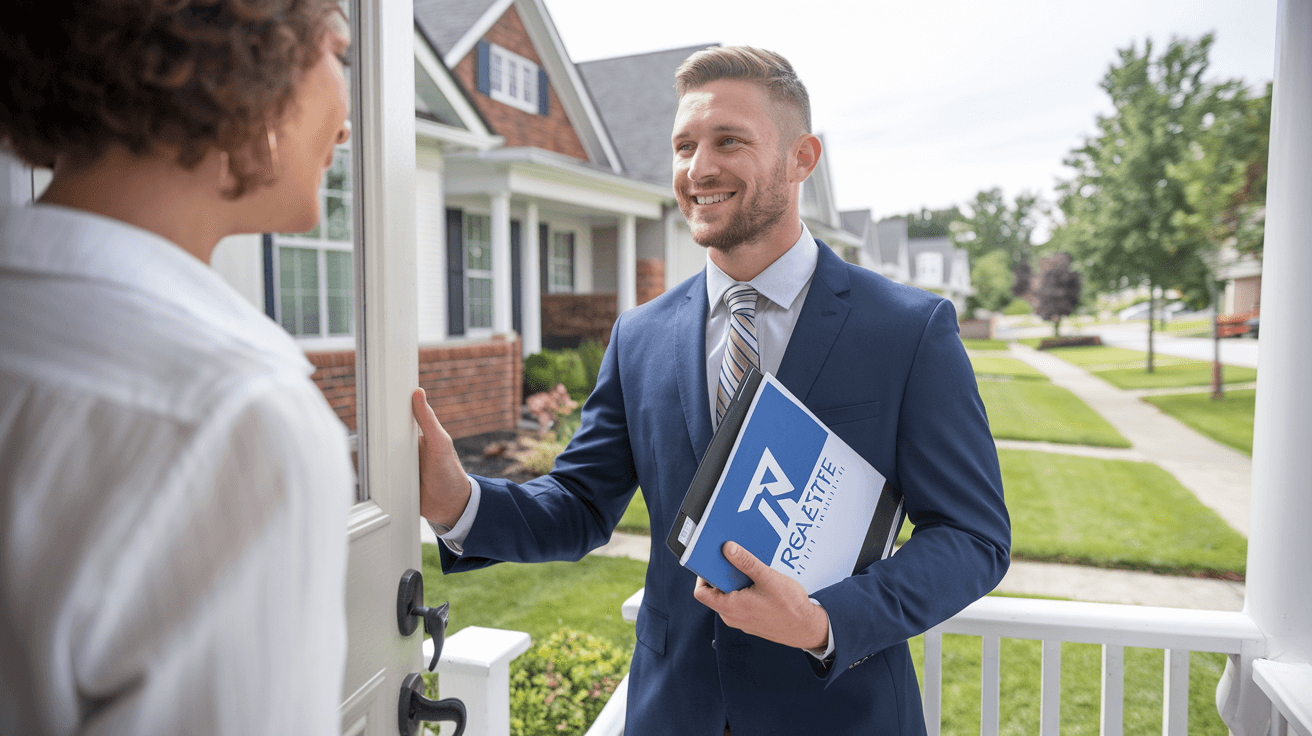
A strong interaction is short, warm, low-pressure, and ends with permission for future contact — not a listing ask. The goal of any single door is one small step: a name, a friendly exchange, and consent to follow up later.
Respect for the resident’s time is itself the message. An agent who is brief and useful is remembered well; one who lingers and pitches is remembered as someone to avoid next time.
How do you do it respectfully and safely?
Knock at reasonable hours, honor every no-solicitation signal immediately, present clearly and professionally, and never push past discomfort — yours or theirs. Respect is not just ethics; it directly determines whether the relationship is buildable at all later.
Personal safety and local solicitation rules come first, always. A door-knocking program that ignores either is neither sustainable nor defensible, regardless of results.
Why is follow-up the part that converts?
Almost no listing comes from the doorstep itself — it comes from the follow-up to the people who engaged, because most are not selling today. An agent who knocks and never logs or follows up does the genuinely hard part and then discards the result.
Every positive interaction becomes a tracked contact with a next action, exactly as in our follow-up systems. The door starts the relationship; the system is what matures it into a transaction.
What routine makes it sustainable?
Sustainable door-knocking is a fixed, modest, recurring block in the same farm — a consistent rhythm beats occasional marathons that burn the agent out. The channel rewards repeated presence, so showing up regularly matters far more than going hard once and stopping.
A small weekly commitment, sustained for months, produces the familiarity that converts. The agents who treat it as a one-time event quit before compounding ever starts.
How do you measure door-knocking?
| Metric | Healthy direction |
|---|---|
| Conversations per session (not doors) | Rising with the reason/approach |
| Opt-ins to future contact | Rising |
| Repeat-area recognition | Building by month 2–3 |
| Follow-up completion | Above 90% |
What kills door-knocking results?
The recurring failures: knocking cold with a pitch, no farm so nothing compounds, no value reason to be there, ignoring respect and safety, and no follow-up on the people who engaged. Each one turns a rare advantage into wasted afternoons.
Frequently asked questions
Does door-knocking still generate listings?
Yes — face-to-face builds trust faster than digital, in a channel almost no one works consistently. Its power is scarcity and repetition, not the single knock.
What should I say at the door?
Lead with a value reason — a nearby sale, a street market update, a genuine question — not “are you thinking of selling,” which is the pitch residents brace for.
Why does it need a farm area?
Familiarity converts, and familiarity requires repetition in the same area. One pass is a stranger; repeated passes make you the local agent.
Is the doorstep where listings are won?
No — follow-up to the people who engaged is where conversion happens, because most are not selling today. Log every positive interaction.
How do I keep it sustainable?
A fixed, modest weekly block in one farm beats occasional marathons. Consistency prevents the burnout that ends most attempts.
How do I stay respectful and safe?
Reasonable hours, honor no-solicitation signals immediately, professional and brief, never push past discomfort. Respect also determines whether the relationship is buildable.
How long until door-knocking produces results?
Recognition builds in two to three months of consistent presence; listings follow through follow-up. It is a compounding channel, not an instant one.
Make door-knocking a relationship system
Najla Wehbe Dipp — San Diego real estate broker (eXp Realty, CA DRE #02024371), MBA and former corporate banker — mentors agents on building predictable, systems-driven businesses. Bilingual (English/Spanish).
📞 Call 858-333-2455 ✉️ Send a message 📍 Visit our contact page