
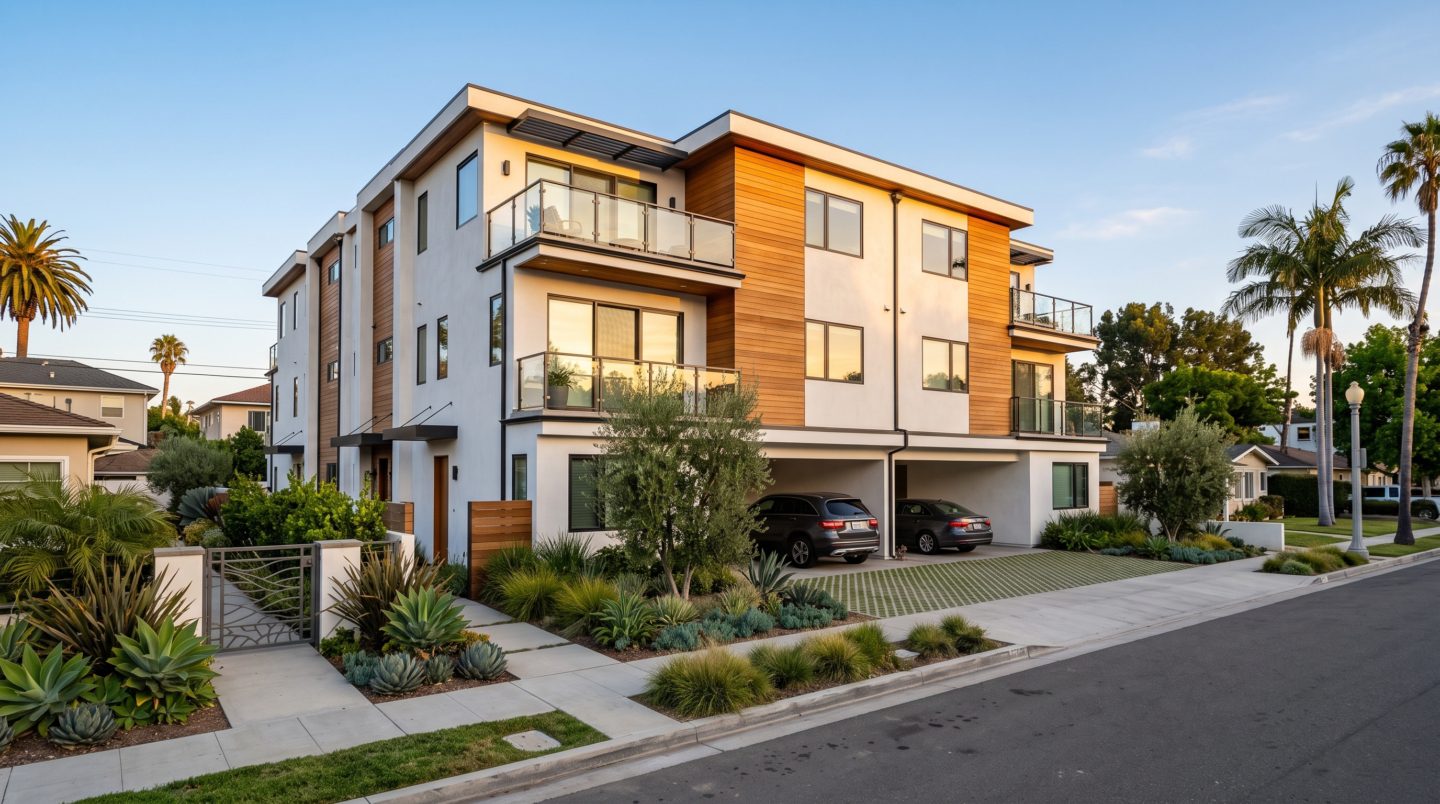
A San Diego rental property is one of the most reliable wealth-building tools available to a disciplined investor — but only when you buy it with a banker’s framework instead of a hunch. Cash flow, financing, and a plan to scale are what separate a portfolio that compounds from a single property that just sits there. That framework is exactly what I bring to the table.
I spent years as Director of Short-Term Credit at Banco Santander before I sold homes in San Diego. I don’t look at a rental as a house — I look at it as an income-producing asset with a return I can measure. Let me give you the framework I use to help investors build a San Diego portfolio that pays now and grows for decades.
Is San Diego a good market for rental property investment?
San Diego is a strong long-term rental market because it combines durable housing demand, constrained supply, and a diverse economy — the fundamentals that support both steady occupancy and long-run appreciation. For a buy-and-hold investor, those are the traits that matter most.
The demand drivers are deep and varied: a large military presence, major universities, a growing tech and biotech sector, and a desirable climate that keeps people moving in. Supply, meanwhile, is constrained by geography and regulation, which supports both rents and values over time. That combination — reliable tenant demand against limited supply — is the foundation of a resilient rental market.
No market is risk-free, and San Diego’s higher entry prices mean cash flow takes discipline to find. But for an investor building for the long term, few markets pair income potential and appreciation as durably as this one.
How do you evaluate a San Diego rental property?
You evaluate a rental property by measuring its return with clear metrics rather than trusting a gut feeling about the home — the same way a bank underwrites a loan. Numbers, not emotions, decide whether a property earns its place in a portfolio.
Three metrics do most of the work:
- Cash flow — the money left each month after the mortgage, taxes, insurance, and expenses are paid. Positive cash flow means the property pays you to own it.
- Cap rate — the property’s net operating income divided by its price, expressed as a percentage. It lets you compare the income return of different properties on equal footing.
- Cash-on-cash return — your annual pre-tax cash flow divided by the actual cash you invested. It measures how hard your down payment is working.
Cap rate is a property’s annual net operating income divided by its purchase price, used to compare the income yield of real estate investments independent of financing. It’s a quick read on how much income an asset produces relative to its cost. Run these numbers before you fall for any property — they tell you the truth a listing photo can’t.
What’s the difference between cash flow and appreciation?
Cash flow is the income a rental produces month to month, while appreciation is the growth in the property’s value over time — and a strong San Diego portfolio is built to capture both. Understanding the trade-off is central to your strategy.
Some markets and properties lean toward cash flow, paying you well each month but appreciating slowly. Others — often higher-priced coastal areas — lean toward appreciation, growing in value strongly while producing thinner monthly income. San Diego spans this spectrum, which is the investor’s opportunity: you can weight a portfolio toward income, toward growth, or balance both across different properties.
Here’s the banker’s view. Cash flow protects you in the short term — it covers the property and cushions you against vacancy or rate changes. Appreciation builds your wealth in the long term. The strongest portfolios don’t choose one; they’re structured so income sustains the hold while appreciation compounds underneath. That balance is the whole game.
How do you finance and scale a rental portfolio?
You scale a rental portfolio by financing each property soundly, using the equity and income it generates to fund the next, and deferring taxes strategically as you trade up. Structure is what turns one rental into a growing portfolio.
The path most disciplined investors follow:
- Finance the first property soundly. Investment-property loans typically require a larger down payment than a primary home. Structuring that financing so the numbers still work is the discipline I built in banking.
- Let each property fund the next. Cash flow and accumulated equity become the fuel for your next purchase, so the portfolio grows on its own momentum rather than fresh capital each time.
- Use a 1031 exchange to trade up tax-deferred. When it’s time to move from a smaller property into a larger one, a 1031 exchange lets you defer capital gains and keep your full equity working — the core move I break down in the 1031 exchange masterclass.
- Reinvest with a plan. Each acquisition should fit a deliberate strategy — more cash flow, more doors, or repositioning into a stronger submarket — not an opportunistic one-off.
That’s how a single San Diego rental becomes a portfolio that compounds, decade over decade.
What should investors weigh before buying a San Diego rental?
Before buying, an investor should weigh the factors that decide whether a rental actually performs, not just whether it looks like a good home. These are the fundamentals I pressure-test on every rental purchase.
| Factor | Why it matters for a San Diego rental |
|---|---|
| Real numbers | Cash flow, cap rate, and cash-on-cash return decide if the property earns its place. Run them first. |
| Location & demand | Buy where tenant demand is durable — near jobs, transit, and amenities — for steady occupancy. |
| Condition & reserves | Older properties carry more maintenance. Budget reserves so a repair doesn’t erase a year of cash flow. |
| Financing structure | The loan terms shape your return as much as the price. Structure them deliberately. |
| Long-term strategy | Know whether each property serves cash flow, appreciation, or a future 1031 trade-up. |
Treating a rental as an income-producing asset with a measurable return — not just a property you happen to own — is how investors build real, lasting wealth in San Diego.
This is informational and not financial, tax, or legal advice; confirm your specifics with a licensed CPA and attorney.
The portfolio rewards a strategist
Building a San Diego rental portfolio isn’t about buying a house and hoping. You build it by measuring returns like a bank, balancing cash flow against appreciation, financing each property soundly, and using tools like the 1031 exchange to scale tax-deferred. Discipline compounds. Hunches don’t.
That’s the framework I bring to every investor I work with: a banker’s read on the numbers, an agent’s read on the San Diego market, and a plan to turn one property into a portfolio that pays you now and grows for decades. Strategy over speed. Every time.
Ready to build your San Diego portfolio? Request a private rental investment strategy session, and I’ll run the numbers on your goals, your capital, and your best San Diego moves — with a banker’s eye for the return.
Frequently Asked Questions
Is San Diego a good place to invest in rental property? San Diego is a strong long-term rental market, driven by durable demand from military, universities, and a growing tech and biotech economy, against geographically constrained supply. Higher entry prices mean cash flow takes discipline to find, but few markets pair income potential and appreciation as durably for buy-and-hold investors.
How do I know if a rental property is a good investment? Measure it with clear metrics rather than a gut feeling: cash flow (money left after all expenses), cap rate (net operating income divided by price), and cash-on-cash return (annual cash flow divided by cash invested). Running these numbers before you buy tells you whether a property actually earns its place in a portfolio.
What is a good cap rate for a San Diego rental? There’s no single “good” cap rate — it depends on the submarket, property type, and your strategy, and higher-priced coastal areas typically show lower cap rates that lean on appreciation. The point of the metric is to compare properties on equal footing, so evaluate any cap rate against comparable local investments and your own goals.
Should I focus on cash flow or appreciation in San Diego? The strongest portfolios capture both. Cash flow protects you month to month and cushions against vacancy or rate changes, while appreciation builds long-term wealth. San Diego spans the spectrum, so you can weight a portfolio toward income, toward growth, or balance both across different properties.
How can I grow my rental portfolio over time? Finance each property soundly, let its cash flow and equity fund your next purchase, and use a 1031 exchange to trade up into larger properties while deferring capital gains tax. Reinvesting with a deliberate strategy, rather than opportunistic one-offs, is how a single rental compounds into a growing portfolio.