
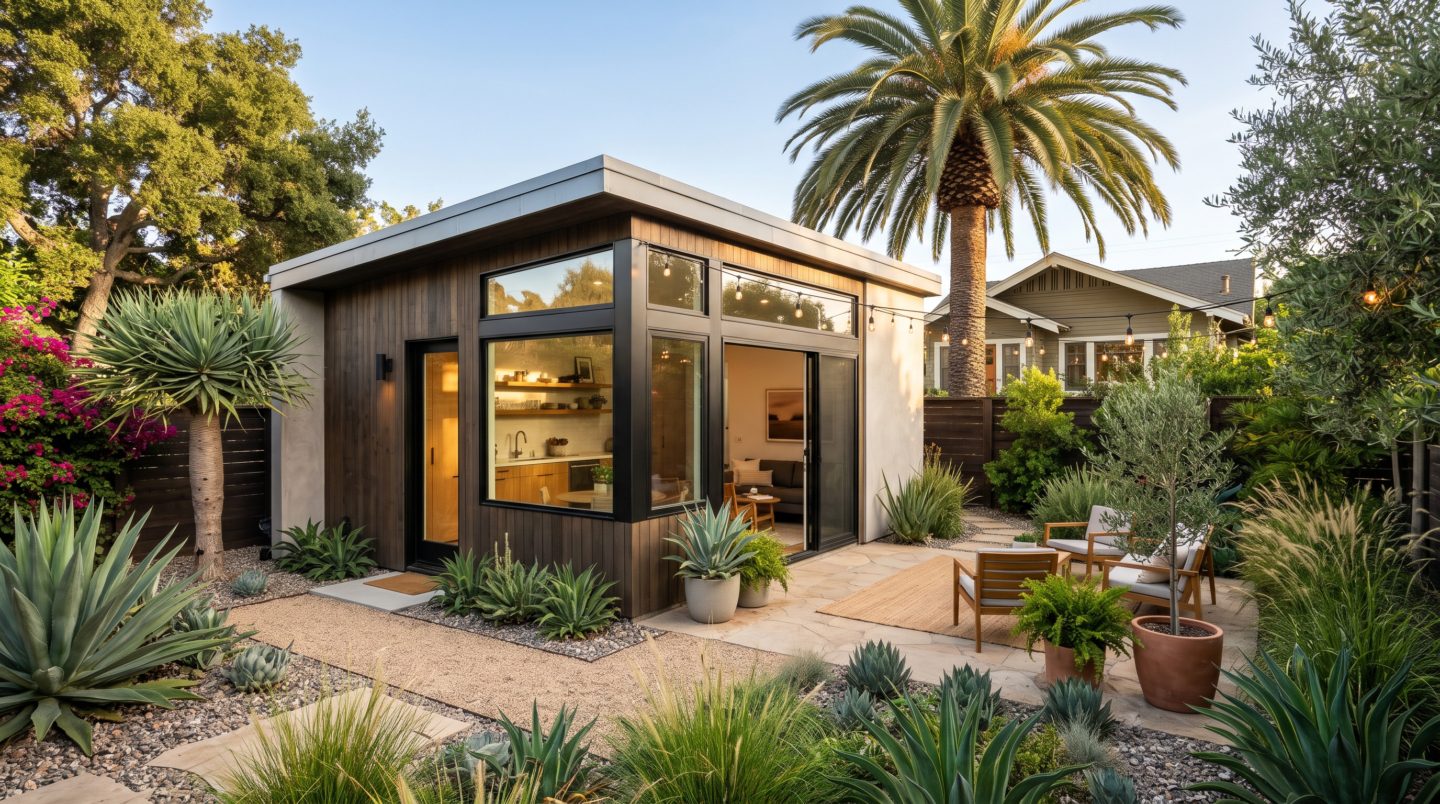
An ADU in San Diego, the backyard cottage people still call a granny flat, has quietly become one of the smartest moves a homeowner can make. It can generate rental income, house family, and add real value to your property, all on land you already own. California has spent years loosening the rules to encourage them, and San Diego has leaned in. If you own a home here, this is an asset hiding in your backyard.
I ran a credit department at Banco Santander before I sold homes, so I look at an ADU the way I would any investment: what does it cost, what does it return, and how does it change the value of the underlying asset? For many San Diego homeowners, the answer is genuinely compelling. Let me walk you through it.
What is an ADU, and why do they matter in San Diego?
An ADU, or accessory dwelling unit, is a second, smaller, independent living space on the same lot as a main home, with its own kitchen, bathroom, and entrance. In San Diego, they matter because state and local rules have made them far easier to build as a response to the housing shortage.
An accessory dwelling unit (ADU) is a self-contained home built on the same property as an existing house, ranging from a converted garage to a detached cottage, with its own kitchen, bathroom, and entrance. California has passed a series of laws over recent years specifically to make ADUs easier and faster to permit, and San Diego has been among the more ADU-friendly cities in the state.
For a homeowner, that shift is the whole opportunity. What used to be a difficult, uncertain project is now a far more accessible path to adding income or space on land you already own. The rules continue to evolve, so current local requirements should always be confirmed, but the direction has been clearly toward making ADUs work.
How can an ADU generate income?
An ADU generates income primarily by serving as a rental unit, producing monthly cash flow from a space on property you already own. That income is what makes an ADU attractive to homeowners and investors alike.
Here is the banker’s view of why this is powerful. You are adding a rentable home without buying more land, which is often the most expensive part of any real estate investment. A long-term rental ADU can produce steady monthly income that helps offset your mortgage or builds cash flow on top of it. Some owners use an ADU to house a family member while keeping the option to rent later, and others build one specifically as an income play.
The exact income depends on the ADU’s size, location, and the local rental market, so the right step is to run real numbers for your specific property rather than rely on a general figure. Running that analysis, the rent potential against the build cost and the value added, is exactly the kind of work I do with owners considering an ADU.
Does an ADU add value to your property?
Yes. A well-built ADU generally adds value to a property, because it increases the home’s usable living space and its income potential, both of which buyers and appraisers recognize. The added value comes from utility and cash flow, not just square footage.
Two forces drive the value. First, you have added a functional, independent living space, which expands what the property can do for its owner, whether that is housing family, generating rent, or both. Second, in a market with high housing demand like San Diego, income-producing flexibility is genuinely valuable to future buyers. A home with a rentable ADU appeals to a wider pool, from multigenerational families to investors.
The value added depends on the quality of the build, the local market, and how the ADU is configured, so it varies by property. What is consistent is the principle: a thoughtful ADU tends to make a San Diego home both more useful and more valuable. It is the same asset-minded logic I bring to building a San Diego rental portfolio.
This is informational and not financial, tax, legal, or construction advice. Confirm current ADU regulations, costs, and tax implications with the appropriate licensed professionals and your local jurisdiction.
What types of ADUs can you build in San Diego?
San Diego homeowners can generally build several types of ADU, from detached backyard cottages to garage conversions and junior ADUs within the main home. The right type depends on your lot, budget, and goals.
The common configurations:
- Detached ADU. A standalone cottage in the yard, offering the most privacy and flexibility, and often the strongest rental appeal.
- Attached ADU. An addition connected to the main house, using the existing structure while adding independent living space.
- Garage conversion. Turning an existing garage into a living unit, which can be a cost-effective path since the structure already exists.
- Junior ADU (JADU). A smaller unit created within the existing home’s footprint, typically with its own entrance, a budget-friendly option.
Each type carries different costs, timelines, and requirements. Matching the right configuration to your property and your goal, income, family, or both, is the first strategic decision, and current local rules on size and setbacks should always be verified for your specific lot.
How do you finance and plan an ADU?
You finance an ADU through options like home equity, renovation loans, or specialized ADU financing, and you plan it by confirming local rules and running the numbers before you build. Sound planning protects the return on the project.
The path I walk homeowners through:
- Confirm current local rules. ADU regulations evolve and vary by lot. Verify what you can build, and the size and setback requirements, for your specific property.
- Run the numbers. Estimate build cost against expected rent and added value. This is the banker’s step, and it decides whether the project makes sense.
- Explore financing. Home equity, a cash-out refinance, renovation loans, or dedicated ADU financing are common routes. Structure matters as much as the rate.
- Plan the build. Work with qualified professionals on design, permits, and construction suited to your goals and budget.
- Decide the use. Long-term rental, family housing, or a flexible mix. The use shapes the design and the financial plan.
Treating an ADU as the investment it is, with the numbers run before the first shovel, is how homeowners make it pay off. That analysis is where my background earns its place for owners weighing the move.
An asset in your own backyard
An ADU in San Diego can turn land you already own into income, flexibility, and added value, which is why California and the city have worked to make them easier to build. For the right homeowner, a granny flat is not a renovation expense, it is an investment with a measurable return, from monthly rent to a more valuable property.
That is the framework I bring to every owner considering one: a banker’s read on the cost, the income, and the value added, an agent’s read on what the San Diego market rewards, and a clear-eyed plan built on real numbers. If you have a backyard and a question about what it could do, let’s run the analysis.
Curious what an ADU could add to your property? Request a private ADU and home value consultation, and I will help you run the numbers on income, cost, and value for your specific San Diego home.
Frequently Asked Questions
What is an ADU in San Diego? An ADU, or accessory dwelling unit, is a second, smaller, independent home on the same lot as an existing house, with its own kitchen, bathroom, and entrance. Often called a granny flat, it can be a detached cottage, an attached addition, a garage conversion, or a junior unit within the home. California and San Diego have made them easier to build to address housing demand.
Can I rent out an ADU for income in San Diego? Yes. Renting an ADU is one of the main reasons homeowners build them, producing monthly income from a unit on property you already own. The income depends on the ADU’s size, location, and the local rental market, so running real numbers for your specific property is the best way to estimate the return.
Does building an ADU increase my home’s value? Generally, yes. A well-built ADU adds usable living space and income potential, both of which buyers and appraisers recognize, especially in a high-demand market like San Diego. The exact value added depends on the build quality, configuration, and local market, so it varies by property.
What types of ADUs are allowed in San Diego? San Diego generally allows detached ADUs, attached ADUs, garage conversions, and junior ADUs within the main home. Each has different costs, timelines, and requirements. Because rules on size, setbacks, and eligibility evolve and depend on your lot, confirm the current regulations for your specific property before planning.
How do people pay for an ADU? Common financing routes include home equity, a cash-out refinance, renovation loans, and specialized ADU financing products. The right option depends on your finances and the project. Running the build cost against the expected rent and added value first helps determine which financing makes the project worthwhile.